





Shortage of specialists?
How to secure your IT security and networks - without your own teams.
Resource allocation in IT departments is a challenge
Focus on the essentials: Managing IT resources correctly
Partners instead of providers
IT teams are used to doing everything themselves. But at a certain point, managed services increase productivity. The decision as to whether to manage the network internally or hand it over to a specialist provider is strategic and crucial to the company's success. The right partner must not only be a commercial fit, but also a cultural and professional fit.
-
Does the provider cover all relevant countries, languages and regions?
-
Is your company important to them or just one of many?
-
Are all the required specialist areas covered?
-
Does the corporate culture fit?
Specialized partners are often the better choice than large providers, especially for SMEs: flexible, approachable and with tailor-made solutions.
Network nodes
worldwide
Customer locations
connected

Network partners
local
years
Experience

Presence in
75+ countries and numerous cities
The SD-WAN market is growing rapidly and has become the preferred solution for the site networking of multinational companies. This is due to the increasing demands of cloud usage, data analytics and mobile, decentralized ways of working, including securing local internet access.
Your IT team has two options to meet these requirements:
-
Do-it-yourself (DIY) SD-WAN, where you and your group handle day-to-day network operations, security threats, company compliance, adding new technologies and managing service upgrades for all your sites in-house.
-
Managed SD-WAN Provider, an external, expert service provider takes care of your network design, connectivity and site security, providing your team with tools and applications to meet security requirements and simplify network management.
When IT decision-makers research new technologies, the opinions of their peers often carry more weight than recommendations from vendors and industry experts. Today, the majority of existing SD-WAN implementations are DIY, at 63%. However, in a survey conducted by the consulting firm Frost & Sullivan, 82% of those who currently manage their SD-WAN themselves say that they would opt for a managed SD-WAN today.
According to the survey, this change of heart is based on the challenges the companies have experienced and on conversations with IT managers from other companies that have already implemented a managed SD-WAN. Sounds a bit strange, since SD-WAN technologies are sold in part for the ease of management and the higher level of automation they offer. But SD-WAN can be very complex and requires a high level of expertise to manage in order to maximize business benefits.
A key advantage of SD-WAN is the integration of local internet access points at every location in order to access cloud applications directly. This means that all routers in the network must be protected against attacks from the internet by firewalls. Unlike in the classic network, all lines are permanently active in the SD-WAN - backup lines are therefore not only used in the event of a fault.
The configuration of which line is preferred for which application can be complex. Mechanisms such as "Quality of Service" (QoS), "Quality of Experience" (QoE), application-based routing and WAN acceleration require regular adaptation to the actual data traffic.
In addition, SD-WAN manufacturers usually update their software on a quarterly basis - to close security gaps and expand functions. The management interface may also change in the process.
The operation of an SD-WAN network requires trained, often certified specialist personnel and good IT technicians are rare and expensive. A service provider with its own Network Operation Center (NOC) benefits from economies of scale: It operates numerous company networks, employs many experts who undergo continuous training and is usually in direct contact with the SD-WAN manufacturer.
Central management consoles and reporting are standard for all SD-WAN manufacturers. However, terms such as "zero-touch provisioning" or "change-by-click" do not automatically mean "simple". Setting up new routers requires complex templates that need to be customized - depending on the location, access technology and bandwidth. This is not comparable to plug & play at home. Although all network parameters can be changed via the central platform, incorrect entries by inexperienced technicians can paralyze the entire network.
The responsible IT managers quickly realize that the migration to the cloud, mobile and home office workstations and local Internet access cannot be managed by a central firewall alone. The leading analyst firm Gartner has introduced the term Secure Access Service Edge (SASE) for this purpose, which all manufacturers of security solutions are now measured against. Modern SD-WAN architectures comply with the SASE concept, but require specialist personnel to respond to breaches of company guidelines or security attacks. Here too, the question arises as to whether a service provider that has to deal with attacks at a large number of customers on a daily basis can protect the network more efficiently.
Redesign your IT
Customized network solutions for your digital future
Resource allocation in IT departments is a challenge - we help with individual network solutions. Together we will find the perfect solution for you and get you started on the road to digitalization!
Get in touch with us!
4 points in focus
Strategic resource planning in IT
-
Expertise
Do you correctly assess your team's capabilities in managing the SD-WAN and SD-WAN functions required for cloud-based applications, security systems and routing?
-
Security
All locations require a secure and stable connection. Local and central firewall configuration and monitoring is required. Zero Trust Networks (ZTN) assume that all network traffic is untrusted. You need to ensure that everything in your network is trustworthy.
-
Staffing
Do you have a team available 24/7 to monitor your network and deal with an outage or security breach whenever and wherever it occurs? Can your team scale as your business grows and your network management becomes more complex?
-
Budget
The budget is closely linked to staffing. What is the best way to optimize your IT budget? At what point is hiring a managed network services partner a better use of resources than hiring and continually training more staff? Depending on your needs, relying on an external team means long-term cost savings for your business. It also frees up valuable time for your team to focus on delivering revenue-generating technologies that will delight your customers.
Resource allocation in IT departments is a challenge
Digital transformation, scalability of IT systems and IT security require resources!
Limited financial resources
Medium-sized companies often have limited capital, which makes it difficult to allocate resources. They need to carefully consider how to use their financial resources most effectively to achieve their business goals.

Time management
Time is a scarce resource and SMEs often have limited human resources. Prioritizing tasks, projects and goals can be a challenge. There is a risk that important tasks are neglected while other less important tasks take up too much time.

Staff shortage
Medium-sized companies often have fewer employees than large companies. This can lead to bottlenecks in the allocation of resources. It can be difficult to find the right people with the right skills for specific projects or tasks. Inefficient staff allocation can affect productivity. Resource allocation in IT departments is a challenge - also in terms of personnel!

Competing priorities
Another problem with resource allocation is that different areas in the company may have different priorities. Marketing, sales, production, customer service and other departments may all have different needs and goals. It can be difficult to reach a consensus and allocate limited resources fairly between the different areas.
Uncertainty and risks
Medium-sized companies often work in dynamic and uncertain business environments. Market changes, competition, changing customer needs and other external factors can have unpredictable effects on the allocation of resources in IT departments. Companies need to be flexible and able to adapt their resources accordingly.

Efficiency and productivity
The efficient use of resources is crucial for medium-sized companies. Identifying bottlenecks, bottlenecks and inefficient processes can be a challenge. Companies need to continuously optimize their workflows to increase productivity and use their resources effectively. Resource allocation in IT departments is both a challenge and an opportunity!

Our customers and their experiences
Experience our innovative solutions in action. Take a look right here or discover more in our detailed case studies!
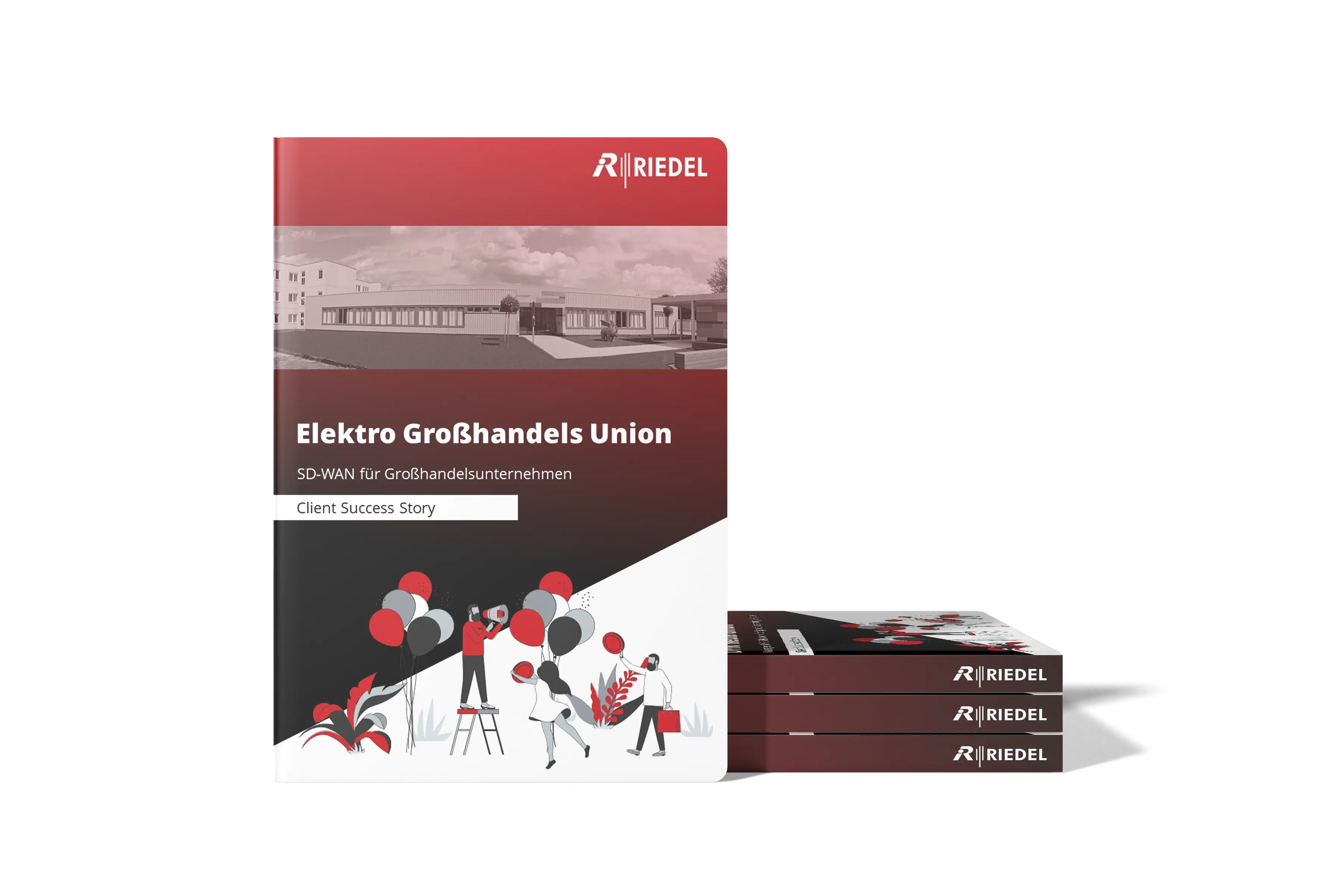
Success Stories
Some of our references and customer projects presented in detail.
Read your own success story?
It only takes a tiny moment to send us a message!